A
Yes — Torsades de Pointes literally means “twisting of the points.”
The name comes from French.
Torsades = twisting
Pointes = points
It describes how the QRS complexes look on an ECG — they appear to twist around the baseline.
🫀 What Is Torsades de Pointes?
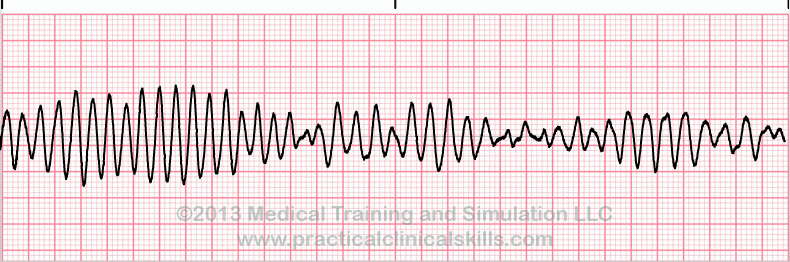


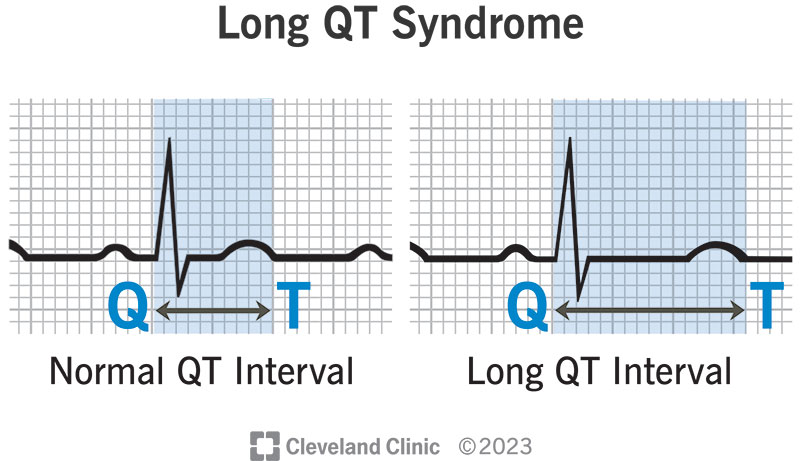
Torsades de Pointes (TdP) is a specific type of:
Polymorphic ventricular tachycardia that occurs in the setting of prolonged QT.
Key features:
Rapid heart rhythm (150–250 bpm)
QRS complexes change shape
The electrical axis appears to “twist” over several beats
Often self-terminating — but can degenerate into ventricular fibrillation
⚡ Why It Happens
It usually occurs when the QT interval is prolonged.
When repolarization (recharge time) is delayed:
Some heart cells reset slower than others
Early afterdepolarizations (EADs) can occur
These trigger abnormal electrical circuits
That instability creates the twisting pattern.
🚨 What Causes It?
1️⃣ Prolonged QTc (> 500 ms especially risky)
2️⃣ Medications
Some antidepressants
Antipsychotics
Macrolide antibiotics
Certain antiarrhythmics
3️⃣ Electrolyte Imbalance
Low potassium
Low magnesium
Low calcium
4️⃣ Congenital Long QT Syndrome
🧠 Why It’s Dangerous
Torsades can:
Cause dizziness
Cause fainting (syncope)
Lead to sudden cardiac arrest
If it degenerates into ventricular fibrillation, it becomes immediately life-threatening.
🏥 Treatment (Emergency Context)
IV magnesium (even if magnesium level is normal)
Correct electrolytes
Stop QT-prolonging drugs
Temporary pacing if recurrent
Defibrillation if unstable
🔁 Why QTc Monitoring Matters
This ties back to what we discussed:
Prolonged QTc = longer recharge time
Long recharge time = electrical instability risk
Torsades is the classic arrhythmia that results.
If you want, we can go deeper into:
Why magnesium works
The difference between monomorphic and polymorphic VT
Or how to recognize QT prolongation on an ECG
What made you bring up torsades — clinical context or curiosity?

No comments:
Post a Comment