A
Nice — that’s a deep one.
Here’s TAME (Technological Approach to Mind Everywhere) by Michael Levin, simplified.
First, who he is:
Michael Levin is a developmental biologist at Tufts who studies regeneration, bioelectricity, and how cells coordinate to build bodies.
🧠 Core Idea of TAME (Super Simple Version)
Intelligence and “mind-like” behavior aren’t limited to brains.
Instead:
Cells, tissues, and even non-neural systems:
Store information
Make decisions
Solve problems
Pursue goals
So instead of asking:
“Does it have a brain?”
TAME asks:
“What goals is this system working toward, and how flexibly can it reach them?”
🧬 Key Shift
Traditional view:
Brain → mind
No brain → no mind
TAME view:
Mind-like processes exist on a spectrum.
Brains are just one advanced example.
Even:
Cells
Immune systems
Regenerating tissues
…can show problem-solving behavior.
🧪 Example: Regeneration

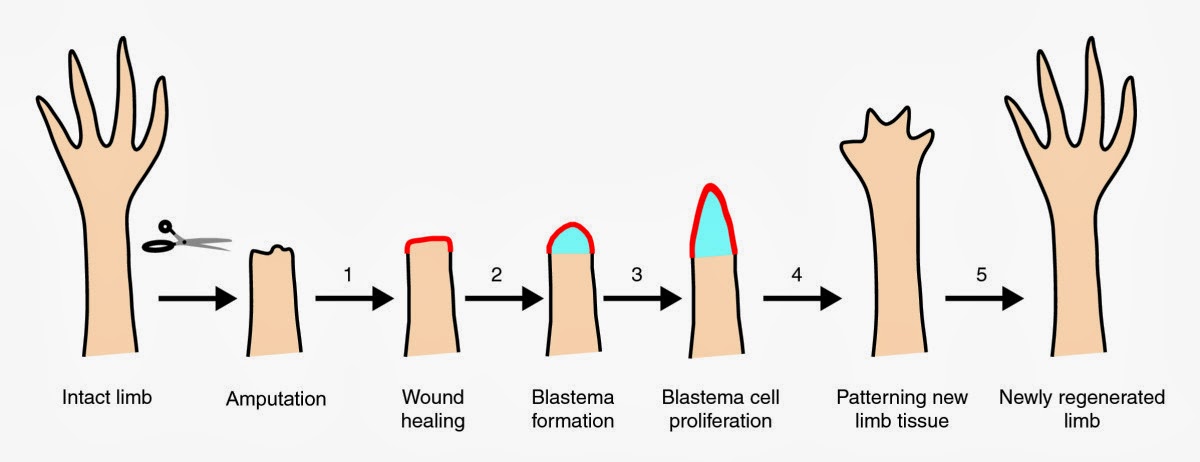
Some organisms can:
Regrow entire limbs
Regrow heads
Rebuild complex structures
How?
Cells coordinate toward a goal state:
“Restore correct body structure.”
They:
Detect errors
Communicate
Adjust behavior
That looks a lot like distributed intelligence.
⚡ Bioelectric Networks
Levin studies bioelectric signals between cells.
Cells use:
Voltage gradients
Ion channels
Electrical communication
These signals guide:
Growth
Shape
Repair
He proposes these networks function like:
A primitive cognitive system.
Not conscious like humans —
But information-processing and goal-directed.
🧭 Why “Technological Approach”?
Instead of debating philosophy (“Is it conscious?”), TAME treats systems like engineers:
What inputs does it sense?
What memory does it have?
What goals does it pursue?
How flexible is its behavior?
It reframes biology using cybernetics and control theory.
🌀 Big Implication
Mind may not suddenly appear at brains.
It may scale:
Ion channels → cells → tissues → organs → nervous systems → humans
That overlaps with ideas like:
Panpsychism
Non-duality
Distributed cognition
But TAME stays experimentally grounded.
It doesn’t claim:
“The universe is one mind.”
It claims:
Goal-directed intelligence exists across biological scales.
🧠 One-Sentence Summary
TAME says:
Mind-like behavior is not binary. It’s a spectrum that shows up wherever systems can sense, remember, and pursue goals — even without brains.
If you want, we can connect this to:
Panpsychism
Consciousness-as-field theories
Psychedelic ego dissolution
Or how this changes medicine
Where do you want to push it?

No comments:
Post a Comment